Split View: 2026 휴머노이드 로봇 완전 가이드 — Tesla Optimus부터 Unitree G1까지
2026 휴머노이드 로봇 완전 가이드 — Tesla Optimus부터 Unitree G1까지
들어가며
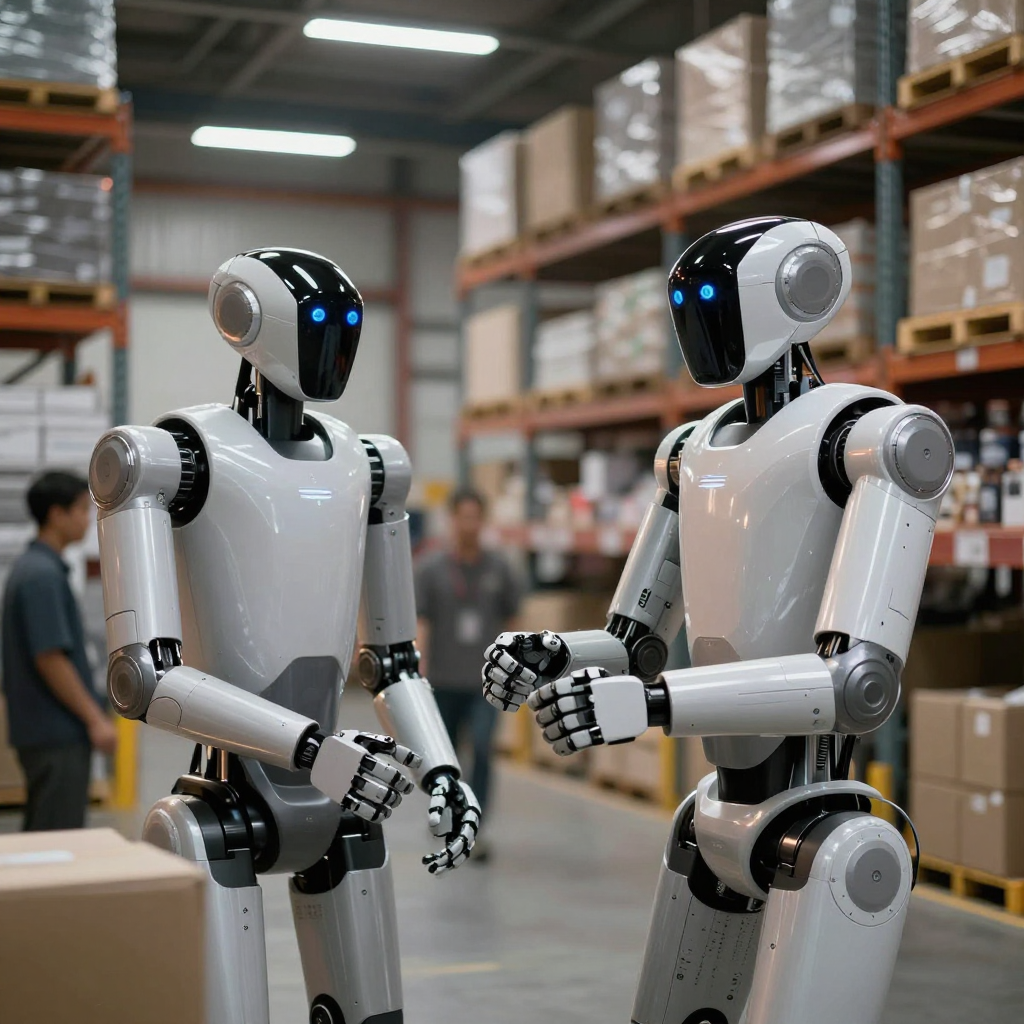
2026년, 휴머노이드 로봇이 공장과 물류 창고를 넘어 일상으로 들어오고 있습니다. Tesla Optimus Gen 3가 Q1 2026 공개를 앞두고 있고, Boston Dynamics의 Electric Atlas는 이미 현대자동차 조지아 공장에서 파일럿 운영 중입니다. 중국의 Unitree는 2026년 1만~2만 대 출하를 목표로 하고 있습니다.
이 글에서는 2026년 주요 휴머노이드 로봇들을 비교 분석하고, 기술 스택, 가격대, 실제 배치 현황, 그리고 개발자 관점에서의 시사점을 정리합니다.
주요 플레이어 비교
Tesla Optimus (Gen 3)
Tesla의 휴머노이드 로봇 프로젝트는 2021 AI Day에서 처음 발표되었고, 2026년 현재 Gen 3까지 진화했습니다.
스펙:
- 키: 173cm / 무게: 57kg
- Gen 3 핵심 업그레이드: 22-DOF 손 (50개 액추에이터) — 사람 손에 가까운 정밀 조작
- AI: Tesla FSD와 동일한 신경망 아키텍처 기반
- 배터리: 2.3kWh, 약 5시간 작동
현황 (2026년 Q1):
- Gen 3 프로토타입 공개 예정
- Musk 인정: "아직 R&D 단계, 유용한 작업은 제한적"
- Tesla 공장 내부에서 학습용으로 운영 중
- 목표 가격: $20,000~$25,000 (대량 생산 시)
# Tesla Optimus의 핵심 — End-to-End 신경망
# FSD와 동일한 접근: 카메라 입력 → 행동 출력
class OptimusPolicy:
    def __init__(self):
        self.vision_encoder = ViT(patch_size=16, dim=1024)
        self.action_decoder = TransformerDecoder(
            num_layers=12,
            num_actions=22,  # 22-DOF hands
        )

    def forward(self, camera_inputs):
        features = self.vision_encoder(camera_inputs)
        actions = self.action_decoder(features)
        return actions  # Joint torques for 22 DOF
Boston Dynamics Atlas (Electric)
유압식 Atlas에서 전기식으로 완전히 재설계된 Electric Atlas는 2026년 상용화를 목표로 하고 있습니다.
스펙:
- 완전 전기 구동 (유압식 대비 조용하고 효율적)
- 360도 회전 관절 — 인간보다 넓은 운동 범위
- AI: Google DeepMind와 협력 (강화학습 기반 제어)
현황:
- 현대자동차 조지아 RMAC(Robotic Manufacturing Automation Center) 파일럿 운영 중
- 상용 가격 예상: $140,000~$150,000
- 2026~2028 상용 출시 계획
- 최근 데모: 인간 수준의 균형 회복, 백플립
Figure AI (Figure 02/03)
Figure AI는 2022년 설립 이후 가장 빠르게 성장한 휴머노이드 스타트업입니다.
핵심 특징:
- Helix AI: 자체 개발 Foundation Model로 로봇 제어
- BotQ: 자사 로봇이 자사 로봇을 조립하는 공장 (자기 복제!)
- OpenAI와 파트너십 (GPT 기반 자연어 명령 이해)
현황:
- Figure 02: BMW 공장에서 파일럿 운영
- Figure 03: 2026년 상업 시설 파일럿 배치 예정
- 누적 펀딩: $7.5B+ (Microsoft, NVIDIA, OpenAI 투자)
Unitree G1 (중국)
가격 파괴로 시장을 뒤흔든 중국 로봇 기업 Unitree.
스펙:
- 가격: $16,000~$99,000 (구성에 따라)
- 중국 내수: 85,000
99,000위안 (약 1,2001,400만 원) - 쿵푸, 백플립 등 고난도 동작 가능
현황 (2026년):
- 2025년 약 5,500대 출하
- 2026년 목표: 10,000~20,000대 출하
- 2026 춘절 갈라에서 쿵푸 공연으로 화제
- UBTECH Walker S2: 국경 순찰 작전 투입 ($37M 계약)
1X NEO (노르웨이)
가정용 로봇을 목표로 하는 1X Technologies.
핵심:
- 가정 환경 최적화 (설거지, 청소, 물건 정리)
- 부드러운 외형 디자인 (위협적이지 않은)
- 2026년 미국 얼리 액세스 고객에게 첫 배송 예정
기술 스택 분석
1. 제어 시스템
현대 휴머노이드 로봇의 제어는 크게 3계층으로 나뉩니다:
고수준 (계획): LLM/VLM 기반 자연어 이해 → 작업 분해 중수준 (기술): 강화학습 정책 → 동작 시퀀스 생성 저수준 (실행): PD 제어 / 토크 제어 → 관절 구동
# 3계층 제어 아키텍처 예시
class HumanoidController:
    def __init__(self):
        # High-level: LLM for task understanding
        self.planner = VisionLanguageModel("gemini-2.5-pro")
        # Mid-level: RL policy for motion
        self.policy = PPOPolicy(obs_dim=128, act_dim=44)
        # Low-level: PD controller for joints
        self.pd = PDController(kp=100, kd=10)

    def execute(self, command: str, observation):
        # "테이블 위의 컵을 들어줘"
        subtasks = self.planner.decompose(command, observation)
        # ["컵 위치 파악", "팔 뻗기", "그립", "들어올리기"]
        for task in subtasks:
            target_pose = self.policy.predict(task, observation)
            torques = self.pd.compute(target_pose, current_pose)
            self.robot.apply(torques)
2. 손 (Dexterous Manipulation)
2026년 가장 큰 기술 진보는 손입니다:
- Tesla Gen 3: 22-DOF, 50 액추에이터 — 달걀을 깨지 않고 집기 가능
- Figure Helix: 비전-촉각 통합 — 물체 재질 인식 후 적절한 힘 조절
- Shadow Robot Dexterous Hand: 24-DOF — 가장 정밀하지만 가격 $100K+
3. AI/ML 스택
┌─────────────────────────────────────┐
│        Natural Language (LLM)       │  ← "선반에서 부품 A를 가져와"
├─────────────────────────────────────┤
│     Vision (ViT / DINO v2)          │  ← 카메라 6대, 깊이 센서
├─────────────────────────────────────┤
│  Imitation Learning / RL Policy     │  ← 시뮬레이터 + 실제 데모
├─────────────────────────────────────┤
│     Sim-to-Real Transfer            │  ← Isaac Sim, MuJoCo
├─────────────────────────────────────┤
│   Motor Control (Torque/Position)   │  ← 실시간 1kHz 제어
└─────────────────────────────────────┘
가격 비교
| 로봇 | 회사 | 가격 (예상) | 출하 현황 |
|---|---|---|---|
| Optimus Gen 3 | Tesla | $20K~25K (목표) | R&D 단계 |
| Electric Atlas | Boston Dynamics | $140K~150K | 파일럿 |
| Figure 02/03 | Figure AI | 미공개 | BMW 파일럿 |
| G1 | Unitree | $16K~99K | 1~2만 대/2026 |
| NEO | 1X Technologies | 미공개 | 얼리 액세스 |
| Walker S2 | UBTECH | 미공개 | 군사 배치 |
| Apollo | Apptronik | 미공개 | $935M 펀딩 |
개발자 관점: 왜 주목해야 하나
ROS 2 + 강화학습 생태계
대부분의 휴머노이드 로봇이 ROS 2를 기반으로 합니다. 로보틱스에 관심 있는 개발자라면:
# ROS 2 Humble + MuJoCo 시뮬레이터로 휴머노이드 제어 실습
sudo apt install ros-humble-desktop
pip install mujoco gymnasium

# Unitree G1 시뮬레이션 환경
git clone https://github.com/unitreerobotics/unitree_mujoco
cd unitree_mujoco && python simulate_g1.py
MLOps for Robotics
로봇 AI 모델의 학습 → 배포 파이프라인은 LLM 서빙과 유사합니다:
- 데이터 수집: 시뮬레이터 + 텔레오퍼레이션 데모
- 학습: PPO/SAC 강화학습 또는 Behavior Cloning
- Sim-to-Real: Domain Randomization으로 현실 적응
- 배포: ONNX/TensorRT로 로봇 온보드 GPU에 추론
- 모니터링: 실패 케이스 수집 → 재학습 루프
Kubernetes + 로봇 플릿 관리
수천 대의 로봇을 관리하려면 클라우드 네이티브 인프라가 필수입니다:
- K8s + FogROS 2: 로봇-클라우드 하이브리드 컴퓨팅
- Fleet Management: 로봇 OTA 업데이트, 원격 모니터링
- Edge AI: NVIDIA Jetson Orin으로 온디바이스 추론
2026년 이후 전망
- 2026: 공장/물류 파일럿 본격화 (Atlas, Figure, Unitree)
- 2027: 가정용 로봇 첫 상용 출시 (1X NEO, Unitree 가정용 모델)
- 2028: Tesla Optimus 대량 생산 시작 (Musk 목표)
- 2030: 로봇 노동력이 특정 산업에서 인간 대체 시작
핵심 변수: AI 제어 능력 (하드웨어는 이미 충분, 소프트웨어가 병목)
마무리
2026년은 휴머노이드 로봇이 "데모 영상"에서 "실제 공장"으로 넘어가는 전환점입니다. Tesla는 여전히 R&D 단계이지만, Boston Dynamics와 Unitree는 이미 실배치를 시작했습니다.
개발자로서 주목할 점: 로보틱스의 핵심 병목은 더 이상 하드웨어가 아니라 AI/소프트웨어입니다. LLM, 강화학습, Sim-to-Real, 그리고 로봇 플릿을 관리할 K8s 인프라 — 이미 우리가 가진 기술 스택의 연장선에 있습니다.
참고 자료:
- Tesla Optimus Complete Analysis 2026
- Boston Dynamics Atlas Production
- Figure AI BotQ Factory
- Unitree G1 2026 Shipment Plans
- Humanoid Robots 2025-2026 Analysis
📝 퀴즈 — 2026 휴머노이드 로봇 (클릭해서 확인!)
Q1. Tesla Optimus Gen 3의 핵심 업그레이드는 무엇인가? ||22-DOF 손 (50개 액추에이터) — 정밀 조작 능력 대폭 향상||
Q2. 2026년 가장 많은 출하량을 목표로 하는 회사와 대수는? ||Unitree — 10,000~20,000대||
Q3. Boston Dynamics Electric Atlas의 예상 가격은? ||$140,000~$150,000||
Q4. Figure AI의 자체 AI 시스템 이름과 특징은? ||Helix — Foundation Model 기반 로봇 제어, 자사 로봇이 자사 로봇을 조립하는 BotQ 공장에도 적용||
Q5. 휴머노이드 로봇 제어의 3계층 구조를 설명하라. ||고수준(LLM/VLM, 작업 분해) → 중수준(RL 정책, 동작 시퀀스) → 저수준(PD/토크 제어, 관절 구동)||
Q6. Unitree G1의 가격 범위는? ||$16,000~$99,000 (구성에 따라 다름)||
Q7. 1X NEO의 타겟 시장은? ||가정용 — 설거지, 청소, 물건 정리 등 가사 작업. 2026년 미국 얼리 액세스 배송 예정||
Q8. Sim-to-Real Transfer에서 Domain Randomization이란? ||시뮬레이터에서 물리 파라미터(마찰, 질량, 조명 등)를 랜덤하게 변경하며 학습시켜, 실제 환경에서도 잘 동작하도록 일반화하는 기법||
2026 Humanoid Robot Complete Guide — From Tesla Optimus to Unitree G1
- Introduction
- Key Player Comparison
- Tech Stack Analysis
- Price Comparison
- Developer Perspective: Why You Should Pay Attention
- Outlook Beyond 2026
- Conclusion
- Quiz
Introduction
In 2026, humanoid robots are moving beyond factories and logistics warehouses into everyday life. Tesla Optimus Gen 3 is set for a Q1 2026 reveal, Boston Dynamics' Electric Atlas is already running a pilot at Hyundai's Georgia plant, and China's Unitree is targeting 10,000 to 20,000 unit shipments in 2026.
In this post, we compare and analyze the major humanoid robots of 2026 — covering their tech stacks, price ranges, real-world deployment status, and implications from a developer's perspective.
Key Player Comparison
Tesla Optimus (Gen 3)
Tesla's humanoid robot project was first announced at AI Day 2021 and has evolved to Gen 3 as of 2026.
Specs:
- Height: 173cm / Weight: 57kg
- Gen 3 key upgrade: 22-DOF hands (50 actuators) — precision manipulation approaching human hands
- AI: Built on the same neural network architecture as Tesla FSD
- Battery: 2.3kWh, approximately 5-hour runtime
Status (Q1 2026):
- Gen 3 prototype reveal upcoming
- Musk acknowledged: "Still in R&D stage, useful tasks are limited"
- Running for training purposes inside Tesla factories
- Target price: $20,000–$25,000 (at mass production)
# The core of Tesla Optimus — End-to-End Neural Network
# Same approach as FSD: camera input → action output
class OptimusPolicy:
    def __init__(self):
        self.vision_encoder = ViT(patch_size=16, dim=1024)
        self.action_decoder = TransformerDecoder(
            num_layers=12,
            num_actions=22,  # 22-DOF hands
        )

    def forward(self, camera_inputs):
        features = self.vision_encoder(camera_inputs)
        actions = self.action_decoder(features)
        return actions  # Joint torques for 22 DOF
Boston Dynamics Atlas (Electric)
Completely redesigned from hydraulic to electric, Electric Atlas aims for commercial deployment in 2026.
Specs:
- Fully electric drive (quieter and more efficient than hydraulic)
- 360-degree rotating joints — wider range of motion than humans
- AI: Collaboration with Google DeepMind (reinforcement learning-based control)
Status:
- Pilot operation at Hyundai's Georgia RMAC (Robotic Manufacturing Automation Center)
- Estimated commercial price: $140,000–$150,000
- Commercial launch planned for 2026–2028
- Recent demo: Human-level balance recovery, backflips
Figure AI (Figure 02/03)
Figure AI is the fastest-growing humanoid startup since its founding in 2022.
Key Features:
- Helix AI: Proprietary Foundation Model for robot control
- BotQ: A factory where their own robots assemble their own robots (self-replication!)
- Partnership with OpenAI (GPT-based natural language command understanding)
Status:
- Figure 02: Pilot operation at BMW factories
- Figure 03: Scheduled for commercial facility pilot deployment in 2026
- Cumulative funding: $7.5B+ (investments from Microsoft, NVIDIA, OpenAI)
Unitree G1 (China)
Unitree, the Chinese robotics company that disrupted the market with aggressive pricing.
Specs:
- Price: $16,000–$99,000 (depending on configuration)
- China domestic: 85,000–99,000 yuan (approximately $12,000–$14,000)
- Capable of advanced movements including kung fu and backflips
Status (2026):
- Approximately 5,500 units shipped in 2025
- 2026 target: 10,000–20,000 units shipped
- Went viral with a kung fu performance at the 2026 Spring Festival Gala
- UBTECH Walker S2: Deployed for border patrol operations ($37M contract)
1X NEO (Norway)
1X Technologies, targeting the home robot market.
Key Points:
- Optimized for home environments (dishwashing, cleaning, organizing items)
- Soft exterior design (non-threatening)
- Scheduled for first delivery to U.S. early access customers in 2026
Tech Stack Analysis
1. Control Systems
Modern humanoid robot control is divided into three layers:
High-level (Planning): LLM/VLM-based natural language understanding → task decomposition Mid-level (Skills): Reinforcement learning policies → motion sequence generation Low-level (Execution): PD control / torque control → joint actuation
# Three-layer control architecture example
class HumanoidController:
    def __init__(self):
        # High-level: LLM for task understanding
        self.planner = VisionLanguageModel("gemini-2.5-pro")
        # Mid-level: RL policy for motion
        self.policy = PPOPolicy(obs_dim=128, act_dim=44)
        # Low-level: PD controller for joints
        self.pd = PDController(kp=100, kd=10)

    def execute(self, command: str, observation):
        # "Pick up the cup on the table"
        subtasks = self.planner.decompose(command, observation)
        # ["Locate cup", "Extend arm", "Grip", "Lift"]
        for task in subtasks:
            target_pose = self.policy.predict(task, observation)
            torques = self.pd.compute(target_pose, current_pose)
            self.robot.apply(torques)
2. Hands (Dexterous Manipulation)
The biggest technological advancement in 2026 is hands:
- Tesla Gen 3: 22-DOF, 50 actuators — can pick up an egg without breaking it
- Figure Helix: Vision-tactile integration — adjusts grip force after recognizing object material
- Shadow Robot Dexterous Hand: 24-DOF — most precise but priced at $100K+
3. AI/ML Stack
┌─────────────────────────────────────┐
│        Natural Language (LLM)       │  ← "Fetch part A from the shelf"
├─────────────────────────────────────┤
│     Vision (ViT / DINO v2)          │  ← 6 cameras, depth sensors
├─────────────────────────────────────┤
│  Imitation Learning / RL Policy     │  ← Simulator + real demos
├─────────────────────────────────────┤
│     Sim-to-Real Transfer            │  ← Isaac Sim, MuJoCo
├─────────────────────────────────────┤
│   Motor Control (Torque/Position)   │  ← Real-time 1kHz control
└─────────────────────────────────────┘
Price Comparison
| Robot | Company | Price (Est.) | Deployment Status |
|---|---|---|---|
| Optimus Gen 3 | Tesla | $20K–25K (goal) | R&D stage |
| Electric Atlas | Boston Dynamics | $140K–150K | Pilot |
| Figure 02/03 | Figure AI | Undisclosed | BMW pilot |
| G1 | Unitree | $16K–99K | 10–20K units/2026 |
| NEO | 1X Technologies | Undisclosed | Early access |
| Walker S2 | UBTECH | Undisclosed | Military deployment |
| Apollo | Apptronik | Undisclosed | $935M funding |
Developer Perspective: Why You Should Pay Attention
ROS 2 + Reinforcement Learning Ecosystem
Most humanoid robots are built on ROS 2. If you're a developer interested in robotics:
# Hands-on humanoid control with ROS 2 Humble + MuJoCo simulator
sudo apt install ros-humble-desktop
pip install mujoco gymnasium

# Unitree G1 simulation environment
git clone https://github.com/unitreerobotics/unitree_mujoco
cd unitree_mujoco && python simulate_g1.py
MLOps for Robotics
The training → deployment pipeline for robot AI models is similar to LLM serving:
- Data Collection: Simulator + teleoperation demos
- Training: PPO/SAC reinforcement learning or Behavior Cloning
- Sim-to-Real: Adapting to reality with Domain Randomization
- Deployment: Inference on robot onboard GPU via ONNX/TensorRT
- Monitoring: Collecting failure cases → retraining loop
Kubernetes + Robot Fleet Management
Managing thousands of robots requires cloud-native infrastructure:
- K8s + FogROS 2: Robot-cloud hybrid computing
- Fleet Management: Robot OTA updates, remote monitoring
- Edge AI: On-device inference with NVIDIA Jetson Orin
Outlook Beyond 2026
- 2026: Full-scale factory/logistics pilots (Atlas, Figure, Unitree)
- 2027: First commercial launch of home robots (1X NEO, Unitree home model)
- 2028: Tesla Optimus mass production begins (Musk's target)
- 2030: Robot labor begins replacing humans in specific industries
Key variable: AI control capability (hardware is already sufficient; software is the bottleneck)
Conclusion
2026 is the turning point where humanoid robots transition from "demo videos" to "real factories." Tesla is still in R&D, but Boston Dynamics and Unitree have already begun actual deployments.
What developers should note: The core bottleneck in robotics is no longer hardware — it's AI/software. LLMs, reinforcement learning, Sim-to-Real, and K8s infrastructure for managing robot fleets — these are all natural extensions of the tech stacks we already have.
References:
- Tesla Optimus Complete Analysis 2026
- Boston Dynamics Atlas Production
- Figure AI BotQ Factory
- Unitree G1 2026 Shipment Plans
- Humanoid Robots 2025-2026 Analysis
Quiz — 2026 Humanoid Robots (Click to reveal!)
Q1. What is the key upgrade in Tesla Optimus Gen 3? ||22-DOF hands (50 actuators) — dramatically improved precision manipulation||
Q2. Which company targets the highest shipment volume in 2026, and how many units? ||Unitree — 10,000 to 20,000 units||
Q3. What is the estimated price of Boston Dynamics Electric Atlas? ||$140,000–$150,000||
Q4. What is Figure AI's proprietary AI system called and what are its features? ||Helix — Foundation Model-based robot control, also applied to the BotQ factory where their own robots assemble their own robots||
Q5. Describe the three-layer control architecture of humanoid robots. ||High-level (LLM/VLM, task decomposition) → Mid-level (RL policy, motion sequences) → Low-level (PD/torque control, joint actuation)||
Q6. What is the price range of the Unitree G1? ||$16,000–$99,000 (varies by configuration)||
Q7. What is 1X NEO's target market? ||Home use — household tasks such as dishwashing, cleaning, and organizing items. Scheduled for U.S. early access delivery in 2026||
Q8. What is Domain Randomization in Sim-to-Real Transfer? ||A technique that generalizes the model by randomly varying physics parameters (friction, mass, lighting, etc.) during simulator training, so that it performs well in real-world environments||
Quiz
Q1: What is the main topic covered in "2026 Humanoid Robot Complete Guide — From Tesla Optimus
to Unitree G1"?
The present and future of the 2026 humanoid robot market. Tesla Optimus Gen 3, Boston Dynamics Atlas, Figure AI, Unitree G1, and 1X NEO — comparing key players, tech stacks, pricing, and real-world deployment status.
Q2: What is Key Player Comparison?
Tesla Optimus (Gen 3) Tesla's humanoid robot project was first announced at AI Day 2021 and has
evolved to Gen 3 as of 2026.
Q3: Explain the core concept of Tech Stack Analysis.
- Control Systems Modern humanoid robot control is divided into three layers: High-level (Planning): LLM/VLM-based natural language understanding → task decomposition Mid-level (Skills): Reinforcement learning policies → motion sequence generation Low-level (Execution): PD contr...
Q4: What are the key aspects of Developer Perspective: Why You Should Pay Attention?
ROS 2 + Reinforcement Learning Ecosystem Most humanoid robots are built on ROS 2. If you're a developer interested in robotics: MLOps for Robotics The training → deployment pipeline for robot AI models is similar to LLM serving: Data Collection: Simulator + teleoperation demos Tr...
Q5: How does Outlook Beyond 2026 work?
2026: Full-scale factory/logistics pilots (Atlas, Figure, Unitree) 2027: First commercial launch
of home robots (1X NEO, Unitree home model) 2028: Tesla Optimus mass production begins (Musk's
target) 2030: Robot labor begins replacing humans in specific industries